Experiences
Truffle hunting: a morning in the woods, a dog, and patience
Le Marche is one of Italy's most important truffle regions. How a hunt actually goes, and why the dog has the leading role.
- When
- October to December (white truffle)
- Duration
- Around two to three hours
- Where
- Acqualagna, Pergola, Arcevia
People imagine it more romantically than it is. No clearing, no basket brimming with tubers. Instead: wet leaves, a slope, a dog that stops dead and starts to dig, and a human who pulls it away at exactly the right moment so the truffle stays intact.
Why dogs and not pigs
Pigs find truffles reliably, but they also want to eat them. Dogs do not. So in Italy practically every truffle hunter works with specially trained dogs, often Lagotto Romagnolo. Training takes years, and a good dog is the most valuable tool a tartufaio owns.
The human leads, but the dog decides. That is the part guests do not expect: you follow, mostly uphill, and you wait.
White, black, and when
Le Marche is known for both white and black truffles. The white one, the expensive one, is in season in autumn, roughly October to December. Black varieties are spread across larger parts of the year. So if the white truffle is the point, come in autumn.
Where the hunting happens
Around Senigallia itself there are only a handful of operators. The real truffle country lies a little further inland but well within reach: Arcevia around 30 kilometres away, Pergola somewhat further, and Acqualagna, Italy's truffle capital, about an hour's drive.
Almost every operator adds a tasting at the end. That is not a trimming, it is the actual point: fresh tagliatelle, truffle shaved over the top, a regional wine alongside. If you want, you buy a piece to take home.
More articles
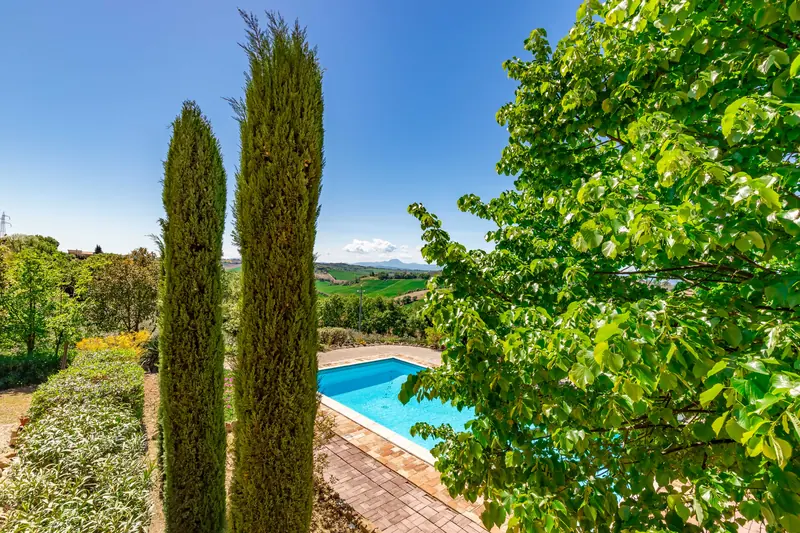
A retreat for twelve: why the house suits yoga groups
A secluded setting, plenty of outdoor space, one kitchen for everyone. What a group leader finds here, and what they need to bring.
Read on →Senigallia: thirteen kilometres of sand and a fortress
The nearest town on the sea is no resort development but a small city with a Roman past, a Renaissance fortress and the beach that gave Italy the phrase Spiaggia di Velluto.
Read on →Corinaldo: 912 metres of town wall and a well full of polenta
The nearest of Italy's officially most beautiful villages is fifteen minutes away, with an almost complete circuit of walls and a legend that made it famous.
Read on →